Car accidents
recently Injured in a Car Accident in Florida?
At Elle Rudisill Law Firm, your personal injury case is personal to us. You won’t feel like a number because we provide individualized attention and keep you informed every step of the way. You have the legal right to speak with your attorney and stay updated on your case, so demand that right.
Contact Elle Rudisill Law Firm today and speak with an attorney who will focus on your unique case and fight for the compensation you deserve.
What Should You Do After a Car Crash?
Get Legal Help After Medical Help.
If you’ve been in an auto accident (car, truck, bus, or motorcycle) what you do next can directly affect your health, finances, and legal rights.
After ensuring safety and calling 911, it is critical to seek medical care — even if you feel “fine” — and document the scene. Just as important, do not give recorded statements or accept an insurance settlement before speaking with a lawyer. Insurance companies move fast to minimize payouts, often before the full extent of injuries is known.
Contact law enforcement.
Call 911 or Florida Highway Patrol at #347.

Get evidence of crash.
Take photos & videos of all vehicles, damage, & the accident scene.

Exchange information.
Exchange driver’s license, insurance, and contact information with all involved drivers.

Identify witnesses.
Identify any witnesses and obtain their contact information.
Get medical evaluation.
Seek medical evaluation, even if injuries seem minor.

Consult Elle Rudisill, Your Personal Injury Attorney.
Consult with Elle Rudisill before making detailed statements or accepting any settlement.
What is a Car Accident (Personal Injury)?
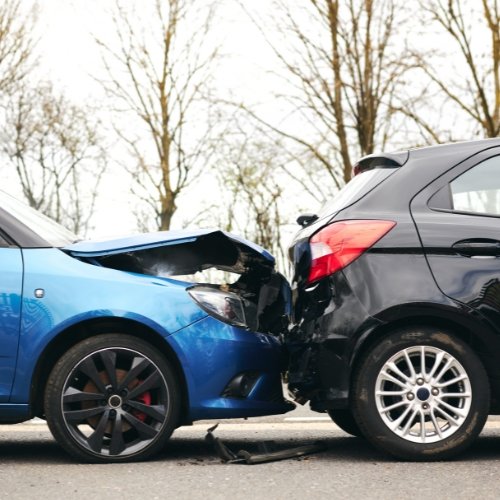
A car accident is a collision involving one or more motor vehicles that results in injuries, property damage, or death. In personal injury law, car accident claims seek compensation for individuals injured because another driver, company, or party acted negligently.
Car accidents are among the most common types of personal injury cases and can range from minor collisions to catastrophic, life-changing crashes.
Common causes of car accidents
Car accidents can result from many forms of negligence, including:
- Distracted driving (texting, phone use, eating, or adjusting navigation)
- Speeding
- Reckless or aggressive driving
- Running red lights or stop signs
- Failure to yield the right of way
- Tailgating
- Driving under the influence (DUI)
- Unsafe lane changes
- Fatigued or drowsy driving
- Improper lane changes
- Poor weather conditions
- Defective vehicle components
- Unsafe road conditions
Common types of car accidents
Car accident claims commonly involve:
- Rear-end collisions
- Head-on collisions
- T-bone (side-impact) accidents
- Sideswipe accidents
- Multi-vehicle pileups
- Rollover accidents
- Hit-and-run accidents
- Intersection accidents
- Highway accidents
- Parking lot accidents
- Single-vehicle crashes caused by another party’s negligence
Common injuries
Victims may suffer:
- Whiplash
- Neck and back injuries
- Traumatic brain injuries (TBI)
- Concussions
- Spinal cord injuries
- Broken bones
- Internal bleeding
- Burns
- Soft tissue injuries
- Lacerations and scarring
- Permanent disability
- Wrongful death
Who may be liable?
Depending on the circumstances, liable parties may include:
- Another driver
- Commercial trucking companies
- Employers of negligent drivers
- Vehicle manufacturers
- Auto repair shops
- Government entities responsible for unsafe roads
- Vehicle owners who negligently entrusted their vehicle
What Must Be Proven?
To recover compensation, an injured person generally must establish:
1. Duty of Care – The at-fault driver or other responsible party owed a duty to operate and maintain a vehicle safely.
2. Breach of Duty – The responsible party acted negligently by violating traffic laws or failing to exercise reasonable care.
3. Causation – The negligence directly caused the accident and resulting injuries.
4. Damages – The victim suffered physical, emotional, or financial losses.
Compensation available
Injured victims may recover compensation for:
- Medical expenses
- Future medical treatment
- Lost wages
- Loss of earning capacity
- Property damage
- Pain and suffering
- Emotional distress
- Permanent disability
- Loss of enjoyment of life
- Wrongful death damages
Evidence that strengthens a claim
Helpful evidence includes:
- Police accident reports
- Photographs and videos of the scene
- Witness statements
- Medical records
- Vehicle damage documentation
- Traffic camera footage
- Cell phone records (when distraction is alleged)
- Black box (EDR) vehicle data
- Accident reconstruction reports
Florida car accident claims
Florida follows a modified no-fault insurance system, meaning injured drivers generally seek initial medical and wage-loss benefits through their own Personal Injury Protection (PIP) coverage, regardless of who caused the accident. However, if an injury meets Florida’s legal threshold for seriousness, the injured person may pursue a claim against the at-fault driver for additional damages, including pain and suffering.
Insurance companies often attempt to minimize claims or shift blame after a crash. Prompt medical treatment, preserving evidence, and obtaining legal guidance can help protect your rights and strengthen your case.
Frequently Asked Questions
How long do I have to file a car accident claim in Florida?
The filing deadline depends on the specific facts of your case and Florida law. Consulting an attorney promptly helps preserve evidence and ensure applicable deadlines are met.
Should I accept the insurance company’s first settlement offer?
Not necessarily. Initial settlement offers may not fully account for future medical expenses, lost earning capacity, or pain and suffering. It is important to understand the full value of your claim before agreeing to a settlement.
contact elle rudisill Law firm
We Put Your Recovery & Compensation First
Elle Rudisill Law Firm represents individuals and families who have been injured due to the negligence of others. Our practice focuses exclusively on personal injury law, allowing us to provide knowledgeable, strategic, and client-focused representation in matters including:
Each case is handled with personalized attention, a thorough investigation, and a results-driven approach to pursuing the maximum compensation available under the law.